


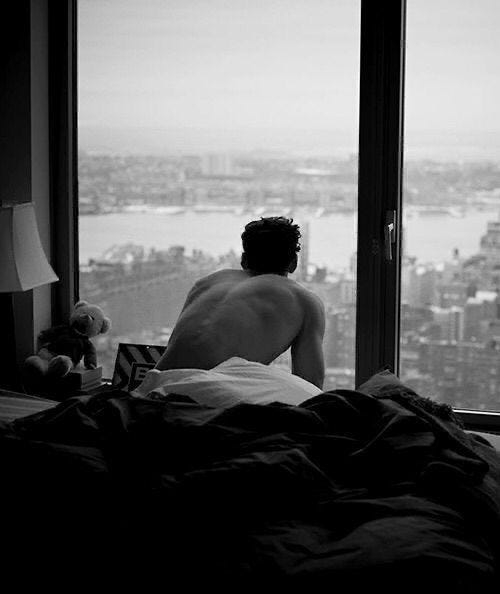
In 2022, for three months, I lived under the same roof as one of the most recognized men in this world.
I won’t tell you his name. It doesn’t matter, and he doesn’t deserve to be a headline. What matters is what I watched.
The man lived everything he preached. To the letter.
The lights went off at sunset. Not dimmed. Off. After dark, the house ran on red incandescent bulbs and nothing else. Mornings began with sunlight on the skin before anything else was allowed to happen. Meals landed at the same hours every day, in the same order, no exceptions, no drift. I bought a washing liquid once that had fragrance in it. He found it, and he was furious. To be fair, fragranced detergent is not a health food. But the reaction was not really about the detergent.
I had massive respect for him. I still do. In a space full of men selling protocols they don’t follow, here was a man who followed his to the decimal. No cheating. No days off. The most disciplined human being I have ever shared a kitchen with.
And yet.. the sad thing was.. it was quietly destroying him.
The discipline had curdled into something else
Here is the thing nobody tells you about total discipline. At some point it stops being a practice and becomes a cage. He had built himself a prison and hung a sign on it that said protocol.
Because the man could not sleep.
That is the part that should stop you. Someone who had optimized every measurable input to sleep, the light, the temperature, the timing, the minerals, the screens, the lot, could not fall asleep. And when he woke at 3am, which he did most nights, he could not get back down. The next day he was short. On edge. Grumpy in a way he couldn’t hide. Then the next night the cycle ran again.
Perfect sleep hygiene. Broken sleep.
Hold that contradiction for a second, because it is the whole story.
You would think the most controlled sleep environment on earth would produce the best sleep on earth. It produced a man lying rigid in the dark at 3am, running diagnostics on his own body, certain that one more variable, found and fixed, would finally let him rest.
I started to notice the cost in the small things. The way every conversation bent back toward the protocol. The way a meal out was not a meal but a risk to be managed. The way an off night didn’t register as a bad night, it registered as evidence. Proof that something was still wrong with the inputs. He was never off duty. Not once in three months did I see him simply at ease in his own body.
The search for the missing input was the stressor
I’ll tell you what I think was actually happening. It took me years and my own collapse to understand it, so I don’t say it lightly.
The hunting was the problem. Not the food. The hunting.
Think about what it does to a nervous system to scan, constantly, for the one variable you haven’t controlled yet. Every meal becomes an experiment. Every symptom becomes a clue. Every night that goes wrong becomes a case to solve. You are a man standing guard over his own body, around the clock, waiting for the threat you are certain is hiding somewhere in the plate.
Your body cannot tell the difference between that vigilance and actual danger.
Standing guard (sympathetic activation) → cortisol stays elevated → the nervous system will not stand down → sleep will not come. Then the bad night becomes proof that an input is still wrong, which sends you straight back to scanning, which keeps you braced. The loop feeds itself. The more rigorously you search for the answer, the further the answer moves away.
There was a cruel piece on top of it too. He measured his sleep every night. And measuring sleep, when you are already wired to find fault, does not calm you down. It hands you a number to fail against. The metric becomes one more thing to stand guard over. The watching makes the watched thing worse.
You cannot supplement your way out of a nervous system that is braced. There is no mineral for it. No light setting. No food combination. The discipline that was supposed to bring him peace had quietly become the thing keeping him at war.
And he could not see it. Because the bars of the cage were made from the exact habits that had once saved his life.
I saw him again a few months ago
Three years had passed. He still wasn’t sleeping.
It had gotten heavy, in the way these things get heavy when they run on long enough and a man carries them alone. I could see where it was heading. I’m not going to dress that up for a newsletter.
I asked him, as gently as I knew how, what he thought it actually was.
He didn’t hesitate. It was a food combination. Something in the sequencing he hadn’t quite cracked yet. He was certain of it. Three years of broken sleep and three years of dark mornings, and the answer, to him, was still somewhere on the plate.
I sat there and said very little.
Not because I disagreed and wanted to win the point. Because I knew that chair. I had sat in it for years myself.
I have had my own war with insomnia
And for a long time I did exactly what he was doing. I hunted the input. I moved the last meal earlier. I changed the magnesium. I chased the combination that would finally let me sleep through the night. I was certain the fix was physical, because physical things can be measured, ordered, bought, and controlled.
It was never the input.
My insomnia had almost nothing to do with food. It had everything to do with my emotional health and my psychology. There were things I was not looking at. Things I did not want to feel. And my body, lying in the dark, simply refused to stand down until I did.
That is the most uncomfortable sentence I have ever written about myself.
Because admitting it costs something real. Especially for men. We will happily concede that the diet is flawed, the training is flawed, the supplement stack is flawed. We will run a hundred experiments on the body without flinching. What we will not easily admit is that the wiring might be faulty. That the thing running us might be in here, in the part you cannot weigh or photograph or fix with a purchase.
Food is tangible. You can buy it, sequence it, control it, track it. The search feels like progress. Every tweak feels like one more step toward the answer. There is a clean, measurable hope in it.
Psychology offers none of that. It is ambiguous and slow, and it does not respond to discipline the way a meal plan does. You cannot biohack your way out of grief. You cannot cold-plunge your way out of fear. You cannot find the right food combination for a life you are quietly avoiding.
So we pick the tangible thing. Of course we do. The food fix is somewhere to put the anxiety. It looks like rigor. It feels like control. It is, underneath, avoidance wearing a lab coat.
This is the interference no protocol removes
I have watched a lot of disciplined men optimize everything except the one thing that was actually running them. The pattern is almost always the same. The harder a man works on the inputs, the more certain you can be that he is using the inputs to avoid the wiring.
The bravest recalibration is not another input. It is sitting in the chair. It is asking whether the thing keeping you awake at 3am has a name, and whether that name is something you have been refusing to say out loud.
Context over ideology. Sometimes the missing variable is not in the food at all. Sometimes it is in the conversation you will not have, with the person who could actually help you have it.
I don’t know whether my old friend will ever sit in that chair. I hope he does. I hope someone reaches him before the discipline finishes what it started.
And if any of this landed a little too cleanly, if you recognized yourself in the man standing guard over his own body against a threat he cannot name, I’ll say to you what I wish someone had said to me sooner. The food is not the thing. It never was.
Subtract the search. Look at the wiring.
If this is the kind of thinking you want more of, I write here every week. No optimization. Less, done in the right order.

P.S. Nothing here is medical or psychological advice, and I am not a clinician. But I’ll say this plainly, because it matters more than any protocol I could hand you. If your sleep has been broken for a long time, and the dark hours have started to carry dark thoughts, that is not a food problem and it is not weakness. It is a signal worth taking to a real person... a doctor, a therapist, someone you trust. Reaching out is not the opposite of discipline. It might be the most disciplined thing you ever do.