



After cancer, my testosterone collapsed.
The fatigue came first, the kind that sleep does not touch. Then the brain fog, the flatness, and the anxiety that had no obvious source. I did not feel like myself. I felt like a faded photocopy of the man I had been, going through the motions of a life that used to feel like mine. If you have been there, you know it is not just tiredness. It is the quiet sense that something load-bearing has gone out of you.
The medical system had an answer ready. A testosterone script. A lifetime on the needle, starting now. And I want to be fair to that answer, because for some men it is the right one. But nobody in that room asked the question I could not stop asking.
Why had it dropped in the first place? They wanted to replace the number. I wanted to understand it.
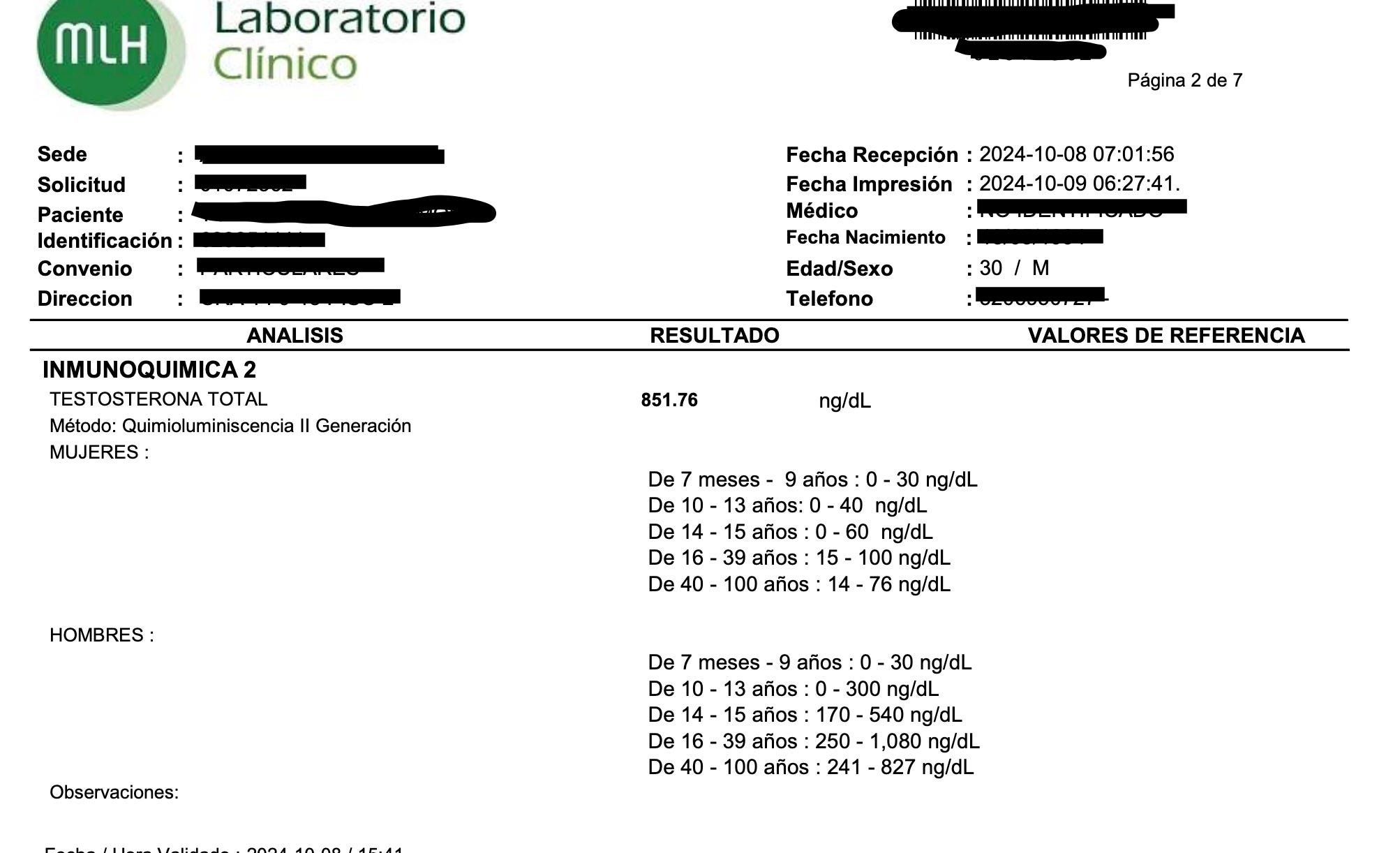
So I went looking for the other path. It took years and A LOT of wrong turns, and I will get to what actually worked. But it ended with my testosterone rebuilt to 851 ng/dl, naturally, without TRT, without drugs, and without a lifetime of dependency. Not because I am special. Because the thing was never as broken as I had been told
The two stories men get told, and why both are wrong
If you are a man over 40 with low testosterone, you have been handed one of two stories.
The mainstream story is that this is just age. Your levels drop, that is what getting older means, accept it or take the replacement. The contrarian internet tells the opposite story, that age has nothing to do with it, that it is all toxins and seed oils and a conspiracy to weaken you. Both are wrong, and the truth sits in the unglamorous middle.
Age is real.
Testosterone does decline as you get older, on the order of one to two percent a year after your thirties. That part is not a lie. But here is what the “it’s just age” story leaves out, and it is the part that changes everything.
When researchers actually dig into that decline, most of it is not the calendar. It is lifestyle. The single biggest driver is visceral fat, the deep belly fat that builds up as men age and stop moving, and it suppresses testosterone so powerfully that becoming obese can cost you roughly what aging a decade would. Add poor sleep, chronic stress, and a processed food supply, and you have explained most of the drop without aging doing much of the heavy lifting at all.
So the honest version is this. A small, slow decline is aging. The large, life-altering crash that sends you to the doctor is almost always a system being suppressed, not a system that has broken. And a suppressed system can be un-suppressed.
About TRT, honestly
Let me be clear, because this is where men go tribal. I am not anti-TRT.
There is a real medical condition, genuine hypogonadism, where the system itself is broken, and for those men, who are a few percent of the over-40 population, testosterone replacement is appropriate, sometimes life-changing, and nothing to be ashamed of. If that is you, work with a doctor and do not let anyone guilt you out of treatment you need.
The problem is not that TRT exists. The problem is that it gets handed out like skittles as the first move to the other ninety-something percent, whose low testosterone is downstream of things they could actually fix.
Few men seem to realize that when you put exogenous testosterone into your body, it tells your own production to shut down. Your testicles get the signal that the work is being done for them, and they stop. So the very thing offered as a fix can quietly remove your ability to make your own, which is fine if you genuinely needed it and a real loss if you did not. TRT should be a considered medical decision, not a default reached for before anyone has asked why the number fell.
What was actually suppressing mine
When I stopped trying to replace the number and started asking what was crushing it, the answers were not exotic. They were the foundations I had been ignoring while I chased fixes.
My sleep was wrecked, and testosterone is largely made while you sleep, so broken sleep is broken hormones. My stress ran permanently high, and chronically elevated stress hormones suppress the whole system. I wasn’t eating enough of the right food, and my training was wrong in both directions at once, too much grinding cardio that kept my stress hormones elevated, not enough of the right posture-focused strength work that actually signals a body to build.
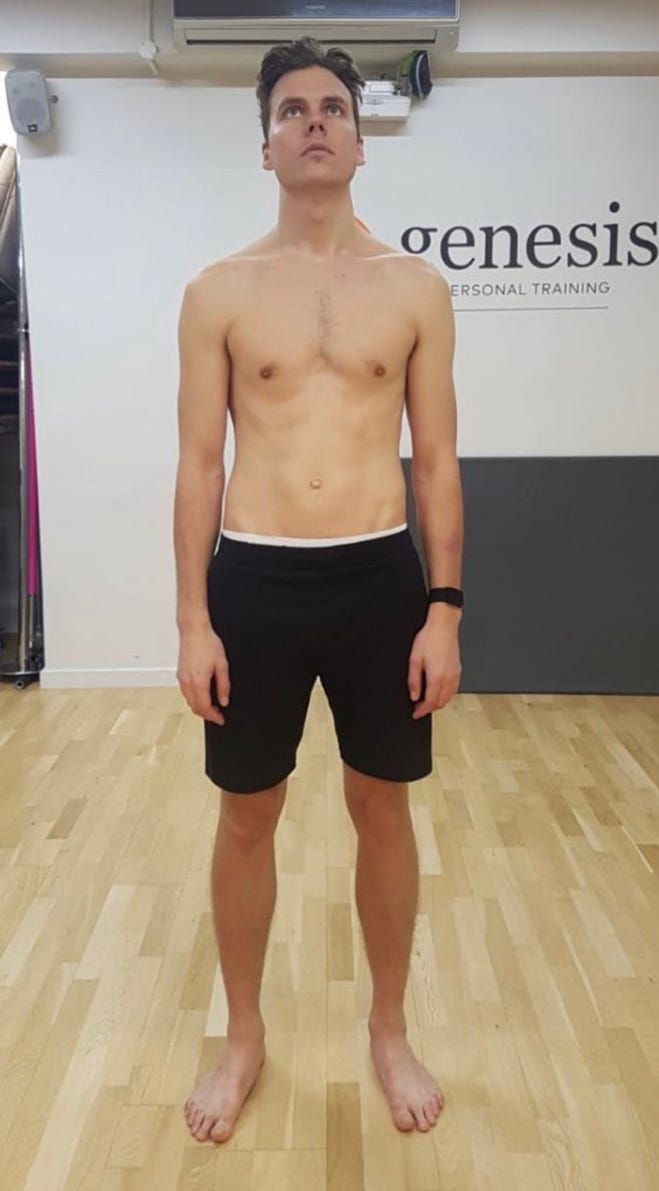
It helps to understand the seesaw here, because it is the part the supplement ads never explain. Your body builds testosterone when it feels safe and resourced, and it pulls back when it feels under threat. Stress hormones and testosterone sit at opposite ends of that seesaw, and pushing one up tends to bring the other down.
So a man running on too little sleep, too much pressure, and a body stuck in a constant low-grade state of alarm does not really have a testosterone deficiency in any meaningful sense. He has a system that has decided, correctly, given the signals it is receiving, that now is not the time to build. Change the signals and the building resumes. That is not a hack. It is just how the machinery was always meant to work.
I also made the classic desperate-man mistakes, and they made it worse. I went to an extreme diet, full carnivore for seven months, convinced that the most hardcore version had to be the most effective. It was not. It wrecked my thyroid and nearly tripled my cholesterol, which is itself a marker of how hard I had pushed my system into survival mode. I have written about that crash on its own. The short version is that extreme restriction is a stressor, and stacking a stressor onto a depleted system does not rebuild it. It buries it deeper.
A word on the supplement chase, too, because I did all of it. The thing to understand is the difference between correcting a real deficiency and chasing a hack. If you are genuinely low in vitamin D or zinc, fixing that matters, because the system needs the raw materials. But swallowing a cabinet of isolated “test boosters” hoping one of them flips a switch is the wrong instinct entirely. You are not missing a pill. You are missing the conditions. And on that note, the men who slash dietary fat to nothing are quietly sabotaging themselves, because cholesterol is the literal raw material your body builds testosterone from. Strip the raw material and there is nothing to build with.
What actually worked
The fix, when it finally came, was almost boringly unglamorous, and every piece of it was about removing what was suppressing the system rather than forcing the system harder.
I fixed my sleep and treated it like the foundation it is. I brought my chronic stress down instead of wearing it as a badge. I ate proper nutrient-dense, well-sourced food to feel fueled rather than punished. I trained in a way that built me up instead of grinding me down, more strength, less frantic cardio. And I stopped chasing hacks and let the foundations do their slow work.

That is what rebuilt my testosterone to 851 ng/dL with no TRT and no dependency. Not a protocol. Not a stack. The removal of the things that had been holding a healthy system underwater, so it could surface on its own. The number was never the project. The conditions were.
What this looks like in other men
I have watched this play out in the men I coach, who are not lazy or weak. They are disciplined, successful operators who were stuck, and stuck is not a willpower problem.
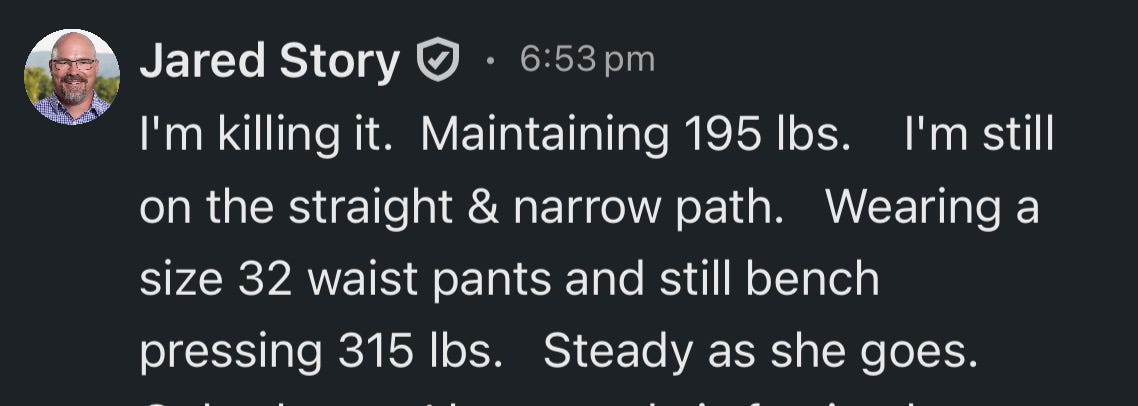
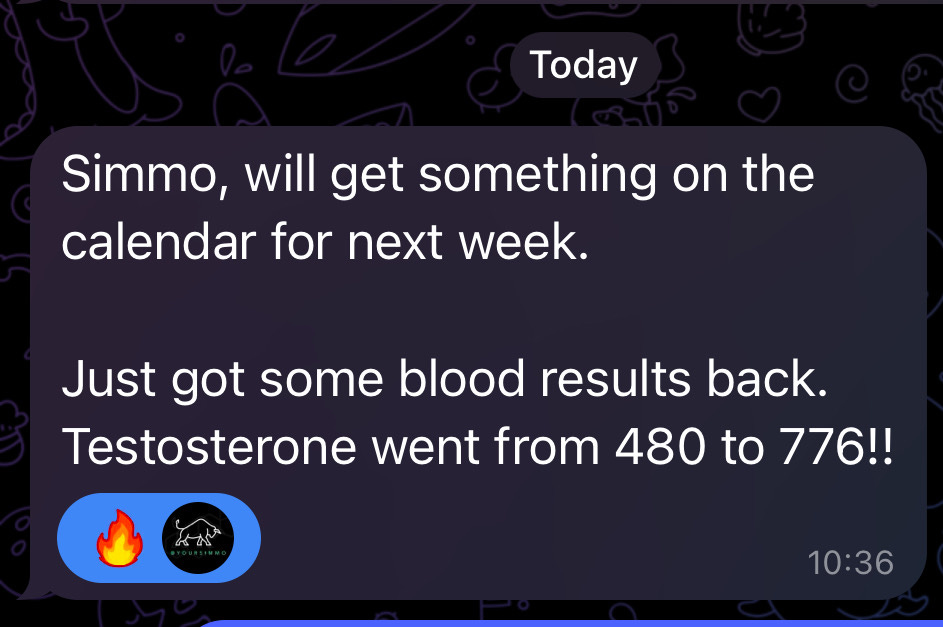
Take Jared Story, 52. Driven, accomplished, and dragging through every afternoon, watching his energy crash and his body soften no matter how hard he worked. In his words, he felt like he was “running the same program harder every year and getting less back.”
We did not add anything exotic. We stripped away the noise and rebuilt the basics, the sleep, the stress, the food, the training. Over a few months his energy steadied and his markers moved, with no TRT involved. The pattern is the same every time. When you stop fighting the system and start removing what suppresses it, a body that looked broken turns out to have been waiting for permission to work
The calibration
Your low testosterone probably is not just age. And it probably is not a broken machine that needs a lifetime of replacement. For most men, it is a healthy system being held down by a handful of things they have the power to change. The crash that scared you into the doctor’s office is usually the most fixable kind.
So before you accept the script, ask the question the appointment skipped.
Why did it fall? Fix your sleep. Manage your stress more effectively. Lose the visceral fat with food, not punishment. Train to build, not to grind. Give the raw materials and the right conditions, and then give it time, because a system that took years to suppress does not rebound in a week. TRT is a real tool for the men who genuinely need it. For most, it is renting a number you could have rebuilt the ability to make yourself.
I did not optimize my way back. I stopped suppressing a system that was never as broken as everyone told me it was. That is the whole secret, and it is available to almost everyone, which is exactly why almost nobody will sell it to you.
This newsletter is where I take the optimization world apart, one sacred cow at a time, from the inside, as a man who chased every one of them and has the scars to show for it. If that is useful to you, subscribe. If it is not, don’t.

P.S. None of this is medical advice, and testosterone is a place where that line matters more than usual. Genuine hypogonadism is a real condition that deserves real treatment, so if your levels are low, get properly evaluated by a doctor with actual bloodwork rather than self-diagnosing from symptoms. Do not start or refuse TRT on the strength of an essay. And if you have a history of cancer or any serious condition, anything involving your hormones is a conversation for your physician, not a protocol from the internet, mine included.
The question nobody in that room asked is what stays with me.
That gap between "the number is low, here is the prescription" and "why did the number fall" is where a lot of men get lost. The script is available the same day the labs come back. The root cause conversation rarely is.
What you said about exogenous testosterone removing the ability to make your own is the part most people never hear. It's not a complication. It's how the system was designed to work — and that context changes what the decision actually is.