


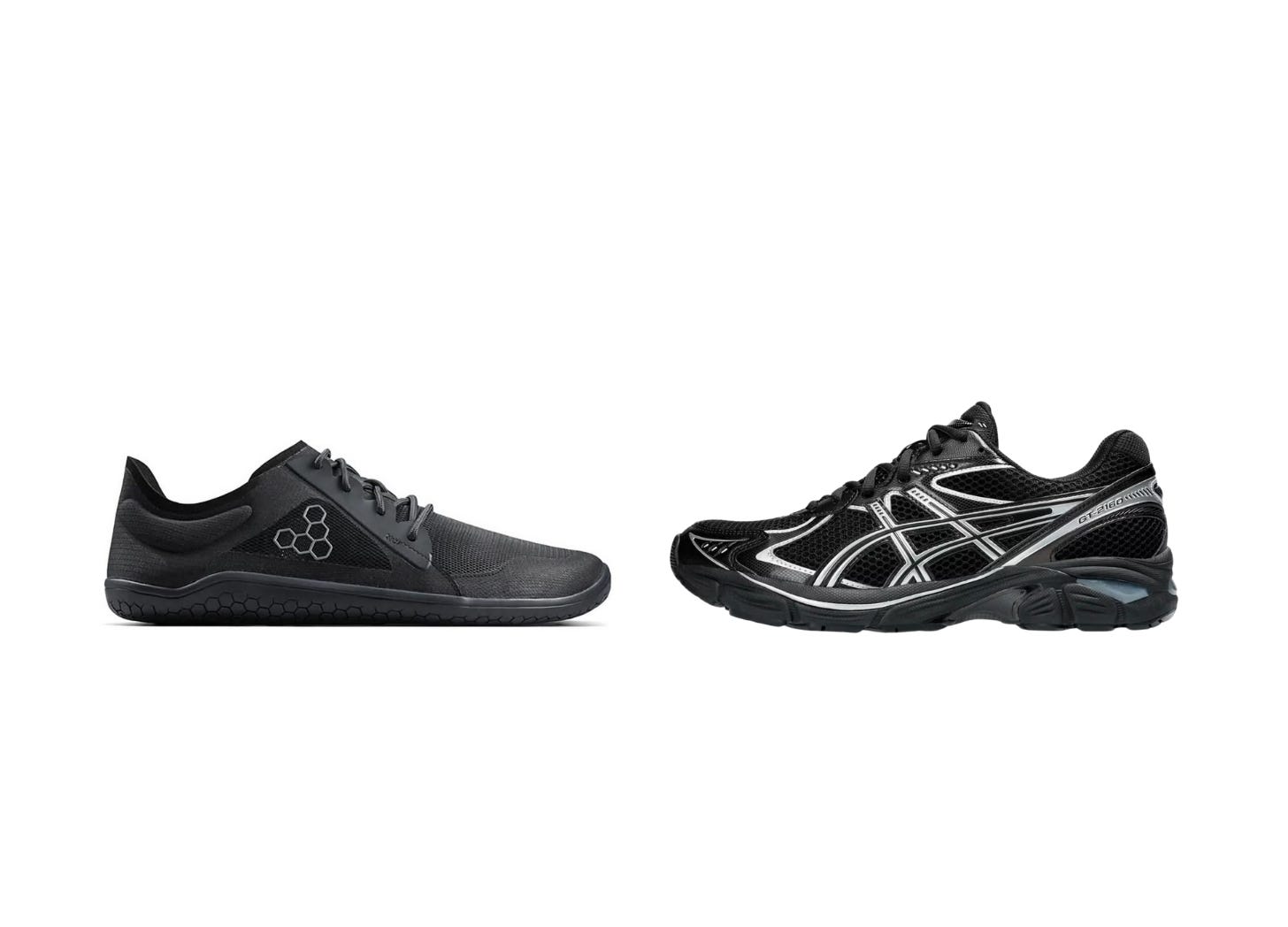
I wore barefoot shoes for 7 years. Thought they were the optimal choice for foot health, nervous system regulation, and natural movement. I recommended them to clients. I was wrong.
I recommended Wim Hof breathing upon waking to over 50 clients. Thought it would enhance performance and resilience. It destroyed their cortisol rhythm. Hyperventilation layered on top of already elevated morning cortisol pushed them deeper into sympathetic overdrive. I was wrong about that too.
I pushed intermittent fasting as a foundational protocol for years. Watched it work brilliantly for some clients and quietly wreck others. Took me longer than it should have to understand why.
None of these protocols are bad. That’s the point. Every one of them works. For someone. In a specific context. At a specific time. Under specific conditions. And every one of them causes damage when applied to the wrong person in the wrong context at the wrong time.
There is no best diet. There is no ultimate supplement. There is no protocol that works for everyone. There is only what works for your specific biology, in your specific context, right now. And almost nothing you read online is accounting for that.
The Problem with “Good” and “Bad”
Open any health account on social media and within 30 seconds you’ll find an absolute claim.
Seed oils are poison.
Cold plunges are essential.
Intermittent fasting is the key to longevity.
Magnesium glycinate is the best form.
Keto is the optimal diet.
Red meat causes cancer.
Red meat cures everything.
Every one of these claims is presented as a universal truth. And every one of them collapses the moment you add context.
Cold plunges are a legitimate hormetic stressor for a healthy 25-year-old with a regulated nervous system and adequate recovery capacity. For a burnt-out 47-year-old CEO waking at 3am with a fried HPA axis, you’re adding stress to a system already drowning in it. Same protocol. Opposite outcome. The protocol didn’t change. The person did.
Intermittent fasting works until your adrenals are shot. Then it accelerates decline. Most of the men I work with felt amazing on IF for the first 6 to 12 months. That was their adrenal reserve burning down. By month 18, they were crashing by 2pm, sleeping terribly, and gaining fat while eating less. The protocol didn’t stop working. Their context changed underneath it and nobody told them that mattered.
Barefoot shoes are excellent for varied, natural terrain. On flat concrete, which is where most men actually wear them, they provide zero varied stimulus to the nervous system through the feet. Flat surface plus flat sole equals the opposite of what the foot needs. I wore them for 7 years before I understood that. Now I wear Asics 2160. Context matters more than ideology.
The pattern is always the same. The advice isn’t wrong. It’s right for a context that isn’t yours. And the person giving the advice has no idea what your context is because they’ve never asked.
Why the Internet Is Built to Lie to You About This
This isn’t a conspiracy. It’s an incentive problem.
Health content that goes viral is health content that makes absolute claims. “Magnesium is the miracle mineral everyone is deficient in” gets millions of views. “Magnesium glycinate may help you if your specific context suggests deficiency, and if the timing is right, and if your gut can absorb it, and if it doesn’t interact with what else you’re taking” gets nothing.
The content economy rewards certainty. It punishes nuance. So every creator, influencer, and brand is structurally incentivized to strip context out of their advice and present it as universal truth. Not because they’re lying. Because that’s what the algorithm promotes.
The result is an entire information landscape where the thing that determines whether a protocol helps or hurts you... your specific context... is the one thing that’s systematically removed from every piece of advice you consume.
You’re not failing because you haven’t found the right protocol. You’re failing because you’re choosing protocols from a system that was never designed to account for you.
There Is No Morality in Biology
This is the piece most people struggle with because health culture has adopted the language of religion.
Clean eating. Dirty bulking. Good fats. Bad carbs. Guilty pleasures. Cheat meals.
We’ve assigned moral value to food and protocols as if your body has an opinion about whether something is righteous or sinful. It doesn’t. Your body doesn’t know what a “clean” food is. It knows what it can use and what it can’t, and that changes depending on the hour, the season, your stress levels, your sleep from last night, and what your gut is currently capable of processing.
There is no good food and no bad food. There is food that is appropriate for your context right now, and food that isn’t. The distinction is everything because it shifts the question from “what should I eat?” (a moral question with a universal answer) to “what does my body need, given everything that’s happening in my system right now?” (a diagnostic question with a personal answer).
The moral framing is how the industry keeps you buying. If seed oils are “bad,” you need the clean alternative. If magnesium is “good,” you need the supplement. If intermittent fasting is “optimal,” you need the program. Every moral label comes with a product attached.
Strip the morality out and what you’re left with is a far more useful question. Not “is this good?” but “is this relevant for me?”
What Actually Determines Whether Something Helps or Hurts
When I work with a new client, I don’t start with protocols. I start with context. Before I prescribe a single change, I need to understand the terrain.
Nervous system state. Is this man in sympathetic overdrive or can his system actually absorb a new input? A protocol added to a regulated nervous system is a tool. The same protocol added to a fried nervous system is another stressor.
Gut function. Is his gut absorbing what he’s already eating? If bile production is suppressed and his small intestine is compromised, the “best” supplement in the world is passing through him unprocessed. The supplement isn’t the problem. The terrain is.
Sleep architecture. Is he getting restorative sleep or just unconscious hours? A training protocol applied to a man sleeping 7 hours of deep, restorative sleep produces a completely different outcome than the same protocol applied to a man getting 7 hours of fragmented, cortisol-disrupted time in bed.
Hormonal environment. What’s his cortisol rhythm doing? His thyroid function? His testosterone-to-estrogen ratio? These determine how his body partitions nutrients, builds muscle, stores or releases fat, and recovers from stress. Change the hormonal context and the same food, same training, same supplement produces a different result.
Biomechanics. How does his body actually move? What compensations has his system built over decades? A training program designed for symmetrical movement applied to an asymmetrical body doesn’t correct anything. It reinforces the pattern.
Lifestyle constraints. Does he travel 3 weeks a month? Does he run a company with 40 employees where 10 things break every day? Does he have young kids? Does he train at 5:30am because that’s his only window? These aren’t obstacles to work around. They are the context. Any protocol that doesn’t account for them is a protocol that will fail.
This is why “what’s the best supplement?” is an unanswerable question. Best for whom? For what context? At what time? Alongside what else? The question itself assumes a universal answer exists. It doesn’t.
The Pattern I See Constantly
Every man who comes to me has the same story. He’s tried everything. He’s followed the experts. He’s bought the supplements, done the diets, tracked the metrics, worn the devices. He’s been disciplined beyond what most people would consider reasonable.
And he’s stuck. Or getting worse.
The reason is always the same. He’s been applying protocols without context. Stacking interventions based on what worked for someone else, in someone else’s body, under someone else’s conditions. He has 47 things in his protocol and needs 3. But he doesn’t know which 3 because nobody has assessed his specific terrain before prescribing.
When I strip it back... reduce to the few things that actually match his biology, his nervous system state, his gut function, his schedule, his stress load... things start moving. Not because I gave him something better. Because I removed what was irrelevant. The simplification is the intervention.
I had one client come to me on 22 supplements, spending $500 a month. We stopped everything. Added back three... Herb Pharm tinctures, desiccated organs, and desiccated oysters. Within four days his gut felt better than it had in years. Three months later he was down 27 lbs and spending $125 a month. The 19 supplements we removed weren’t “bad.” They were irrelevant for his context. And the irrelevance was creating load.
That’s the pattern. Not “this protocol doesn’t work.” But “this protocol doesn’t work for you, right now, given what your system is dealing with.”
The Only Filter You Need
The next time you see a health claim online... any claim, from any source... run it through one question.
Does this person know my context?
Do they know my nervous system state, my gut function, my sleep architecture, my stress load, my hormonal environment, my training history, my biomechanical patterns, my work schedule, my family constraints?
If the answer is no, then the advice is generic. It might be right. It might be wrong. You have no way of knowing because the only thing that would make it useful... the intersection with your specific biology... is missing.
This isn’t a reason to ignore all health information. It’s a reason to change how you evaluate it. Stop asking “is this good advice?” and start asking “is this relevant advice for my context?”
When you hear “X is bad,” that’s your cue to run for the hills. When you hear “X, in this context, for this type of person, can cause this specific problem,” that’s someone who understands how biology actually works.
The answer is always nuanced. Not because nuance sounds smarter. Because biology doesn’t do absolutes. It does context.
If you read this far and the thinking resonates, the newsletter is where I write more of it.
1-2 emails a week on what calibration actually looks like for men over 40 who’ve stopped getting returns from effort alone. Context over ideology, subtraction over addition, and why the protocol that built you at 30 is usually the protocol breaking you at 48.
Subscribe if you want it. Don’t if you don’t.

P.S. Not medical advice.