


I used to train hard first thing in the morning.
Not at 5. Around 9, before the rest of the day could get to me. For years I thought of that as the disciplined choice, and I went hard whatever kind of night I’d had.
Now I check in with myself first. If I’ve got capacity, I train. If I haven’t, I go for a long walk instead. And I’ve watched a lot of men make a similar shift and get their afternoons back.
I know this cuts against something a lot of driven men are proud of, but for the man who’s short on sleep and running on stress, a hard 5am session is usually doing more harm than good.
This isn’t me saying training is bad, or that early training can’t work. It can. It’s more that the intensity has to match the state you’re in. A hard session lands very differently on a body that slept well than on one that’s already running on empty.
The 5am day
The day I hear about on calls goes something like this.
The alarm goes off at 5.
He’s slept less than he needed, but the session is in the calendar, so he goes.
Coffee on an empty stomach, sometimes a pre-workout on top.
By 5:30 he’s in the gym, training hard on no food.
By 7 he’s showered, on his second coffee, and in his inbox.
The morning is meetings, back to back, until lunch.
Lunch happens at the desk, or it doesn’t happen.
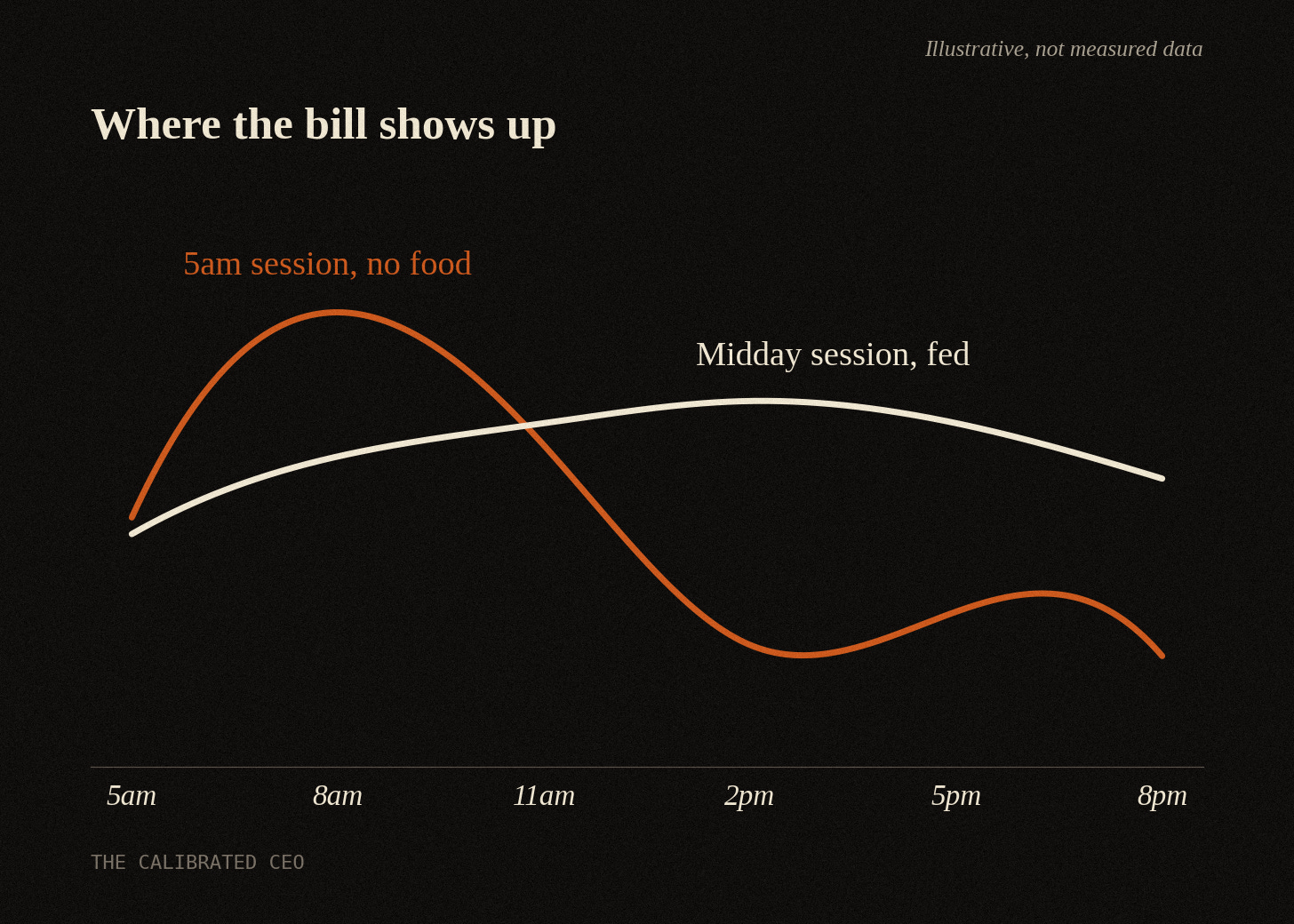
And then, somewhere around 2, the wall.
His focus goes, his eyes get heavy, and he reaches for more coffee, or something sweet (to get through to the end of the day).
He gets home, his kids want him, and there isn’t much left to give.
By 10 he’s in bed... counting down the hours before the alarm.
Then he does it all again.
One of my clients, Adam, summed up his version perfectly. “For the past 20 years,” he told me, “it’s been a wake up at 5, workout, grind, grind, crash in the afternoon.”
20 years of that.
And Adam isn’t lazy (the opposite, if anything). He’s a co-founder and partner in two 9-figure businesses, and he’s in better shape than most men his age. That’s exactly what makes this pattern so hard to see.
I also understand why he did it.
He told me his mornings had always been “the only times that are mine.”
Work took over the middle of the day. Family took over the evening. So the first couple of hours, before anyone else was up, were the only slot left for himself.
That makes complete sense. If the day only gives you one window, you take it.
The cost comes from walking into that window already running on empty. And then training as if you weren’t.
What it costs
From the outside, this day looks like discipline.
From the inside, it costs three things.
First, the afternoon. The hours when he’s most needed at work, he’s running on fumes and caffeine.
Then the evening. The men I work with want energy for their families when they walk through the door. On this day, it’s been spent before lunch.
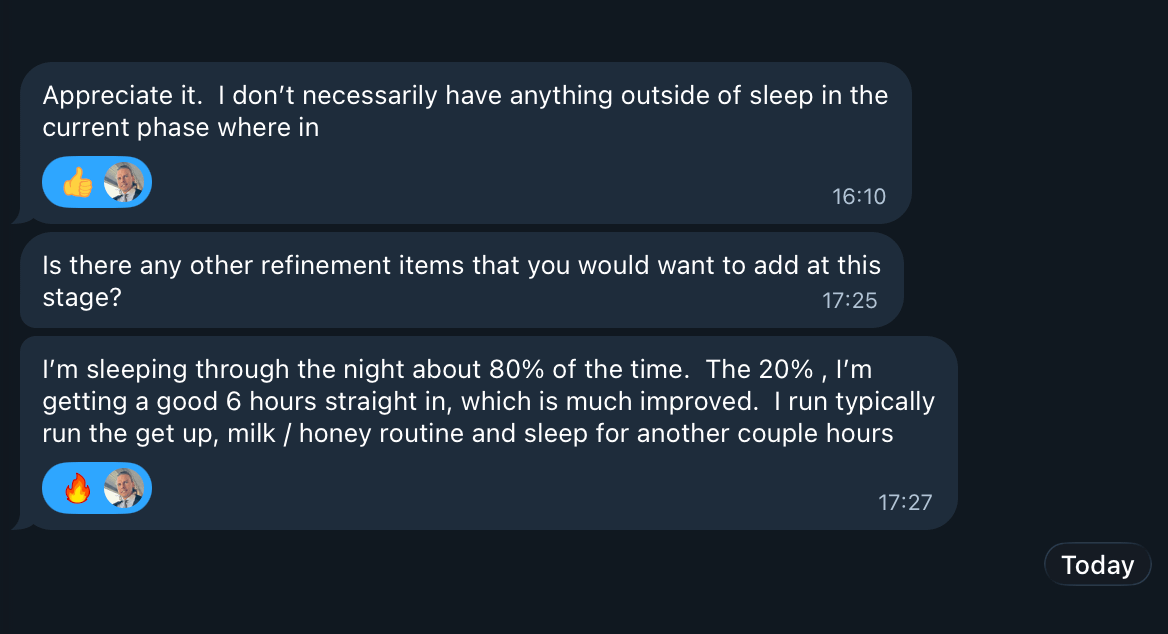
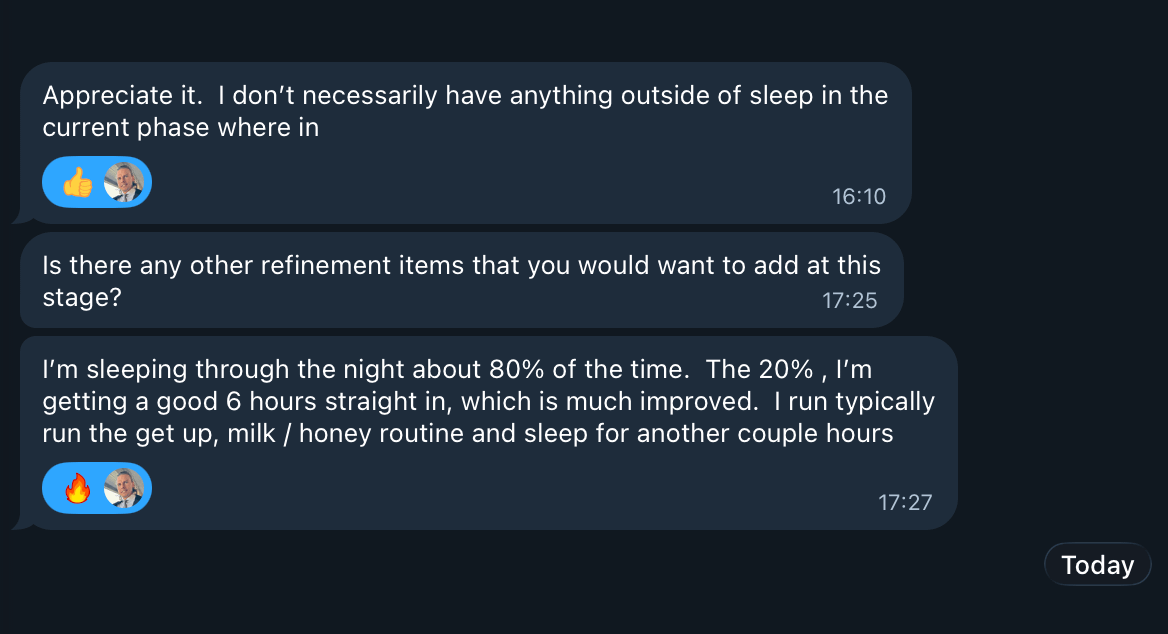
And sleep. When the alarm is set for 5, bedtime turns into a countdown. You lie there working out how much sleep you’ll get if you fall asleep right now. That kind of pressure doesn’t help anyone drift off.
I see this all the time. Disciplined, capable men, doing more than almost anyone they know, and paying for it every afternoon.
Why it goes wrong
So why does it go wrong?
Your body runs on a daily rhythm. Its stress chemistry naturally rises in the morning to get you up and moving. That’s normal, and it’s useful.
Now look at the man who’s slept badly, feels drained, or is anxious by nature. His nervous system is usually already over-aroused, on high alert before his feet hit the floor.
Stack this on top of it: coffee on an empty stomach and a hard session with nothing in the tank.
Hard training pushes that stress chemistry higher, at the time of day it’s already running highest, in a system that was already on alert. Coffee on an empty stomach adds to it for a lot of men, and a short night leaves less in reserve to recover with.
This is how I explain it to clients.
The early session is borrowed energy. He’s putting it on a credit card.
And the afternoon crash is the BILL arriving.
The interest shows up as the second coffee, the evening with nothing left, and the restless night that sets up the next morning’s borrowing.
Now, I’m going to let you in on a little secret.
Most of the men I work with don’t lack effort, they lack clarity on the order things go in.
If the foundations aren’t right (sleep, food, timing), training can be close to futile. You can’t out-train a body that’s already overdrawn.
More discipline poured into a stressed system just gets you a more disciplined crash.
The day I’d build instead
The day I’d build instead is close to the one I live now.
Wake up and get outside. Morning light first.
Eat soon after waking. For me, that’s eggs. I don’t drink coffee, but if you do, have it after you’ve eaten.
Then check in with yourself. How did you sleep? How’s your mood, your energy, your drive?
If you’ve got capacity, train, and train well. If you haven’t, go for a walk instead. Let how you slept and how you feel decide the intensity. The plan in your calendar can bend.
When you do train hard, a lot of men find the middle of the day works best, with food already in them. Adam has started doing his version of this. He eats something around 11, then heads to the gym at about 11:30. Lunchtime, as he put it, works... and it gave him his lunches back.
I’d go further. For a lot of men, training is overrated. Walk more. Get outside more. Take calls on foot. There are easy ways to move all day long without a hard session at all. Then save the hard training for the weekend, or later in the week when the schedule loosens up.
Eat again after training.
Give the morning to proactive work. I do mine from about 8:30 to 12:30. Strategy, writing, anything that needs a clear head. Three or four hours on one thing.
Ideally, no calls in the morning at all.
I find going from a call straight into strategic work genuinely hard. A call takes a completely different kind of energy. Mix the two and you’re constantly shifting gears.
Alex Hormozi works this way.
His team books his calls from the end of the day backwards: 4pm first, then 3, then 2. That keeps his mornings and early afternoons for the work only he can do.
If your calls have to happen in the morning, keep them in one block.
Olaf, another client, is doing exactly that.
He’s moving his calls into the morning so they don’t bleed into the rest of the day, because, as he put it, “I’m trying to actually get to the point where I’m shutting off my screen midday.”
He’s also shifting his training out of the early morning and into the afternoon, so he arrives “already on a full tank of gas, having eaten well.”
Then the evening... wind down with something you genuinely enjoy.
I’m not as strict about screens as you might expect. If you wear blue blockers and you’re watching something entertaining (comedy, a show you love) or reading a book, I don’t think it does much harm.
My point is that obsessing over screens while your nervous system is still wired is futile. Regulate yourself first. That matters far more than the screen.
What I’d steer clear of is the logic-heavy podcast at night. That keeps your brain working right when it should be winding down.

What changes first
So what changes first?
Usually, the afternoon.
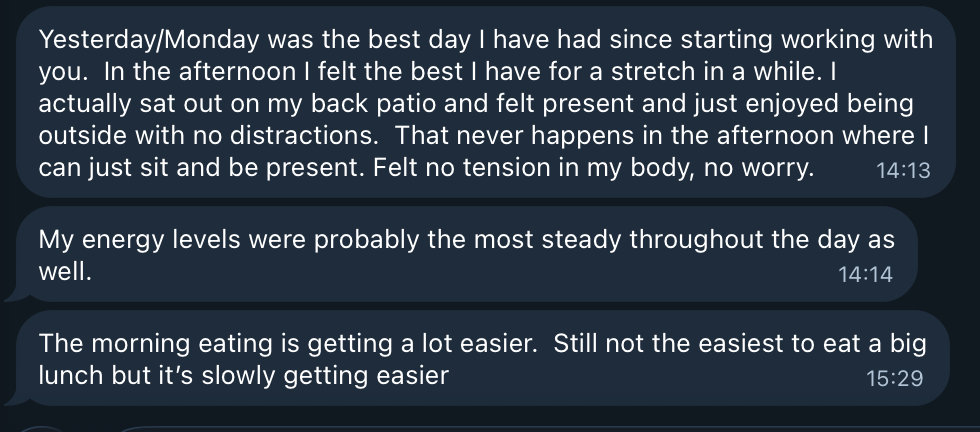
Adam slowed his mornings down and started eating earlier, and the crash that had been a regular part of his day started to ease. In his words, the change “helped my afternoon crash, which 6+ months ago was pretty consistent.”
He was honest about it: “I wouldn’t say it’s completely gone.” But in his words, it’s “trending in the right way.”
The second thing he noticed was sleep. “I feel like my sleep’s gotten better,” he told me, “because I don’t feel like I’m on the shot clock at night.”
Then focus. When the morning isn’t spent recovering from a session, you get the clearest hours of the day for your best work. Three or four hours on a single task, without a call cutting through it, is where I do my best work.
This week
What I’d do this week:
Check in each morning before you train. If you’ve got capacity, train. If you don’t, walk.
Eat before any session, and have your coffee after food.
Move your calls as late in the day as you can.
And watch your afternoons. That’s where the bill shows up first, and it’s where you’ll notice it stop arriving.
Remember: Context over ideology. Every. Single. Time.
Which one sounds like you? Comment the letter below:
A. I train before 7am, usually on coffee and no food
B. I hit a wall around 2pm most days
C. I go to bed doing the math on how many hours I’ll get
I’ll reply with what I think is going on for your version, and why.
For A, what that early session is likely borrowing from the rest of your day. For B, why the crash tends to land when it does. For C, why the countdown keeps you awake. One letter is enough.
Rather keep it private? DM me the letter instead. You’ll get the same answer, and it stays between you and me.
And if you’re over 40 and want to subscribe to receive more posts like this, you can do so here:
Appreciate your attention. See you soon.
Simmo.

P.P.S. I'm a health coach, not a doctor or licensed healthcare professional. This is general education, not medical advice, and no coaching or medical relationship is created by reading, commenting or messaging me. Client experiences are their own; yours may differ. Talk to your doctor before changing your training, diet or caffeine, especially if you have a heart condition, take medication or are under a doctor's care. If you have chest pain, fainting or an irregular heartbeat during or after exercise, seek medical care immediately.